MiCA Forces Binance to Close Accounts in 4 EU Nations: What You Should Do Next

|
Key Takeaways
|
 |
| By Beth Canova Reviewed By: Dawn Pennington |
As my colleague Dawn Pennington said yesterday, crypto might not have been on the ballot in last week's U.S. midterms …
But it IS on the menu in Washington.
With Democrats set to take control of key committees in Congress, the push for clear crypto rules could soon face a much tougher test. And some of the industry's harshest critics may have a lot more say in what those rules look like.
Which means pro-crypto legislators are scrambling to see what can be done, particularly for the CLARITY Act before that happens.
Related Story: Bitcoin Tops $80K After Midterms: 3 Things Crypto Investors Should Know
For a glimpse of what could lie ahead, look across the Atlantic.
Europe has spent years crafting its own crypto rules.
Now, those rules are forcing Binance — the world's largest crypto exchange by trading volume — to close customer accounts in four European nations.
The hit comes just over a week after Binance suffered the largest financial heist in history. Now, select users have just weeks to move their money or face new fees.
It's a stark sign of how fast new laws can change the crypto market.
And it holds a key lesson for U.S. investors.
Europe's New Crypto Rules Are Taking Hold
The law behind this shift is called the Markets in Crypto-Assets Regulation, or MiCA.
It's the European Union's first broad set of rules for the crypto market.
The goal is simple: Make crypto firms play by one clear set of rules. Protect users. And make it harder for bad actors to put customer funds at risk.
Before MiCA, each EU nation had its own rules for crypto firms. Back then, an exchange could be cleared to do business in one nation … but face a whole new set of rules next door.
Naturally, that became a real thorn in the side of any European crypto business looking to grow.
MiCA fixed that by forcing crypto exchanges to get a license from an EU member state to offer their services across the bloc.
Once approved, they can use that license to serve users in other EU nations.
The process is known as "passporting."
In theory, it's a big win for firms that want to grow across Europe.
But there's a catch: Firms that don't get a license must stop offering covered services. The EU gave firms time to make the switch. That grace period ended on July 1, 2026.
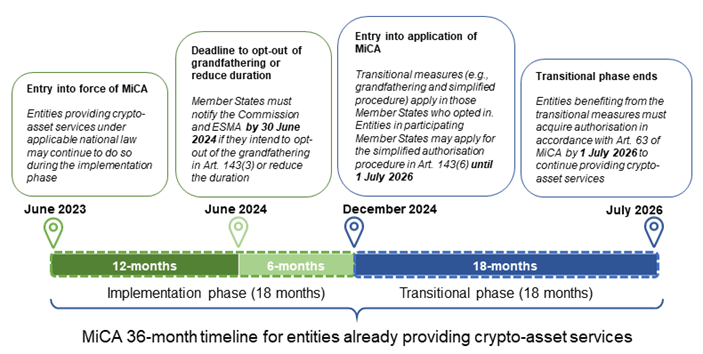
And Binance didn't make the cut.
The exchange had sought a license in Greece but withdrew its bid in June. It says it still plans to get approved in another EU nation.
But for now, it lacks the license it needs.
And that has real costs.
Four Nations, Thousands of Users Facing a Deadline
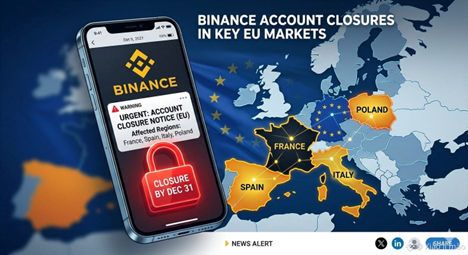
Binance has begun closing out accounts in France, Spain, Italy and Poland.
The firm first warned users in those nations back in June.
Now, the final dates are in sight: Affected accounts will close on Dec. 31, 2026.
But users face a much earlier date if they want to avoid new fees. Starting on Nov. 29, Binance plans to charge a monthly fee on crypto left in affected accounts.
That fee is 0.025% of the balance, or 10 USD Coin (USDC, Stablecoin), whichever is more. Since USDC is pegged to the U.S. dollar, that’s the equivalent of $10.
That may not sound like much. But it could be sizeable if you have a small account. If you have just $100 in crypto on Binance, that fee would eat up 10% of your funds in one shot.
If you have less than 10 USDC worth of crypto, the fee could wipe out your full balance.
And a second fee could hit after Dec. 24.
For Binance, this is a major setback.
The firm must wind down affected accounts in four key markets — France, Italy, Spain and Poland. It also risks losing users to rivals that have secured EU licenses.
And there's no clear date for when Binance might win approval and return to full service.
Still, there's some good news.
This is not a sudden freeze. Binance says user funds remain safe and can still be taken out. Though new deposits are blocked for affected users.
That's a key point.
The rules may force Binance to shut down these accounts. But they don't mean users have lost their assets.
What Binance Users Need to Do Now
If you live in France, Spain, Italy or Poland and use Binance, don't wait until New Year's Eve.
The first key date is Nov. 29.
Here's how to prepare:
1. Check your account.
Log in through the official Binance site or app. Look for any notice about your account and its closing date.
Don't trust links in random emails or texts. Go through your app directly.
Scammers love to use urgent news like this to steal funds, so don’t give them the chance.
2. Move your crypto before fees begin.
If your account is affected, plan to withdraw your funds before Nov. 29.
You can move them to a wallet you control or to a crypto exchange that is licensed to serve your nation. Just be sure to check that where you send them can support the coins you own.
And if you move crypto to a wallet, make sure you choose the right network.
Sending your coins to the wrong address or network can mean lost funds.
3. Withdraw your cash, too.
Don't leave euros or other cash balances behind.
Check which bank transfer options are still open. And allow time for any delays.
4. Save your records.
Keep copies of your trade history, deposits and withdrawals.
You may need them for taxes or to track the cost of your coins.
5. Don't assume the deadline will move.
After Dec. 31, Binance may treat crypto left in affected accounts as inactive. That could lead to assets being moved or sold under the firm's terms.
It's best to act while you still have full access to withdrawals.
If you live elsewhere in Europe, your Binance account should remain unaffected for now.
That said, it may be worthwhile to check your exchange's license status. MiCA applies across the EU, so this issue could spread beyond just those four nations.
What Europe Can Teach Washington
The Binance news shows why crypto rules matter so much.
Clear laws can help keep users safe. They can give firms a path to grow. And they can help build trust in a market that still needs it.
But the details matter.
Rules that sound good on paper can have a huge impact once they take hold.
Just ask the Binance users who now have to move their funds.
That's the lesson for Washington. And for us.
The proposed CLARITY Act aims to set clearer rules for the U.S. crypto market. But the midterms have changed the path ahead.
With tougher crypto critics gaining more sway in Congress, the road to a deal could be long. Lawmakers still have to agree on who should oversee crypto, which firms should face which rules and how best to protect users.
Europe shows us what happens when those choices turn into law.
Some firms adapt. Others lose access to key markets. And users feel the effects.
That doesn't mean the U.S. should give up on clear rules.
Far from it.
It means getting those rules right is worth the work.
For investors, the best move is to stay alert, use firms that follow local laws and keep control of where your assets are held.
Crypto's future won't be shaped by price charts alone.
It will also be shaped by the laws that decide who gets to take part. And that fight is far from over.
Best,
Beth Canova