Robinhood Teamed Up with Hyperliquid's Biggest Rival. Here's Why It Matters
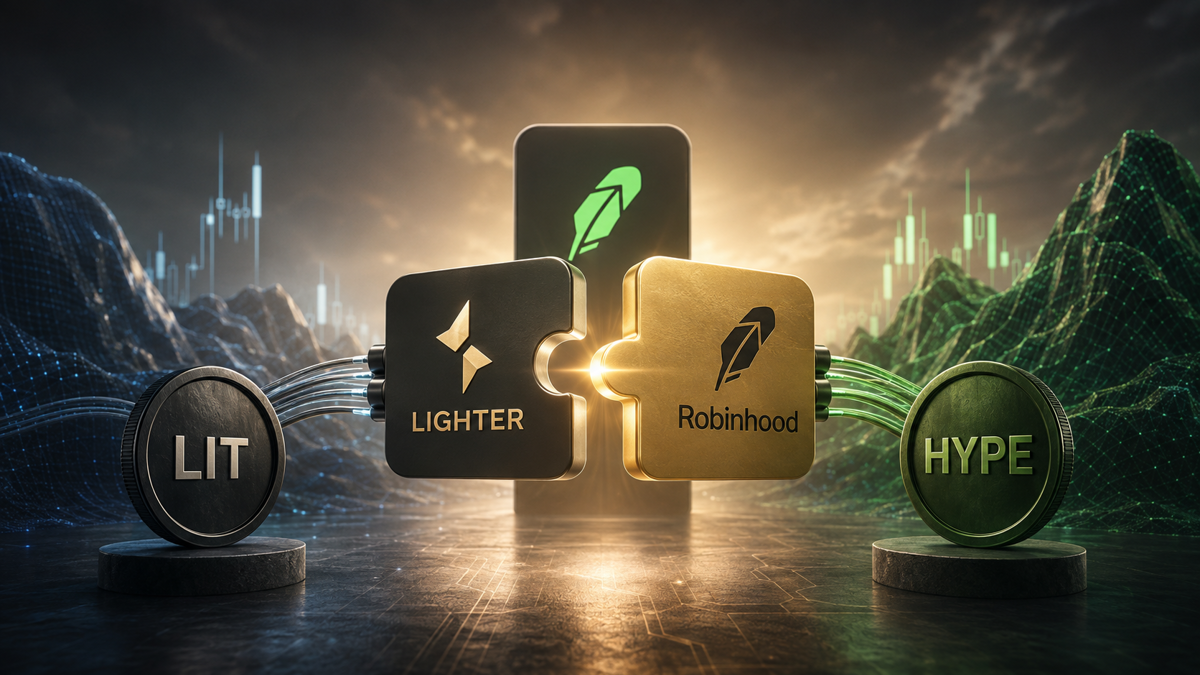
 |
| By Beth Canova |
Every so often, a company everyone knows quietly bolts on technology almost nobody has heard of.
The users never see it. The plumbing just works.
Last month, tens of millions of Robinhood customers got exactly that.
Robinhood added on-chain perpetual futures to its wallet, run by a crypto exchange most of its users will never name.
But that’s not the interesting part. As crypto investors, our focus should be on the exchange that won the slot — a small project called Lighter (LIT, “E+”). And why it wanted to partner with a broker in the first place.
The Disruptor to HYPE’s Dominator
For over a year, the decentralized-derivatives story had one main character: Hyperliquid (HYPE, “D”).
In 2025, it accounted for over 70% of all on-chain derivatives activity. And thanks to its buyback-and-burn mechanism, a lot of the revenue generated from that activity is directly reflected in its token, HYPE.
Enter Lighter — a new rival that took a different route.
While its tokenomics are the mirror image of HYPE's, Lighter is not simply a smaller Hyperliquid. It is approaching on-chain derivatives from a more institutional perspective.
See, Hyperliquid monetizes retail traders. Lighter is built as infrastructure to sit behind brokers and professional desks. And its move into Robinhood is the first real test of that model.
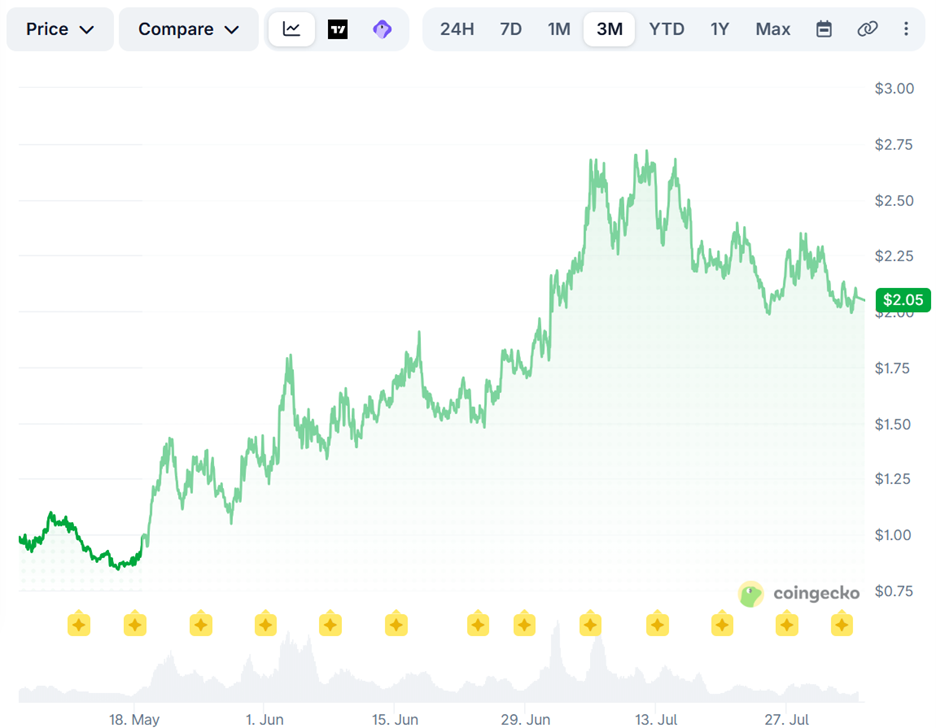
What Lighter Actually Is
Lighter is a decentralized exchange for perpetual futures, or perps. These are futures contracts with no expiration date. They let traders bet on future price action with leverage.
Like Hyperliquid, Lighter runs on-chain, so the trader keeps custody of their assets the whole time. No company sits on your balance.
The difference is in its design.
Lighter is built as a zero-knowledge rollup, a structure that proves every trade is fair without a central referee, with no front-running and zero trading fees for ordinary users.
It earns instead by charging the professional market makers.
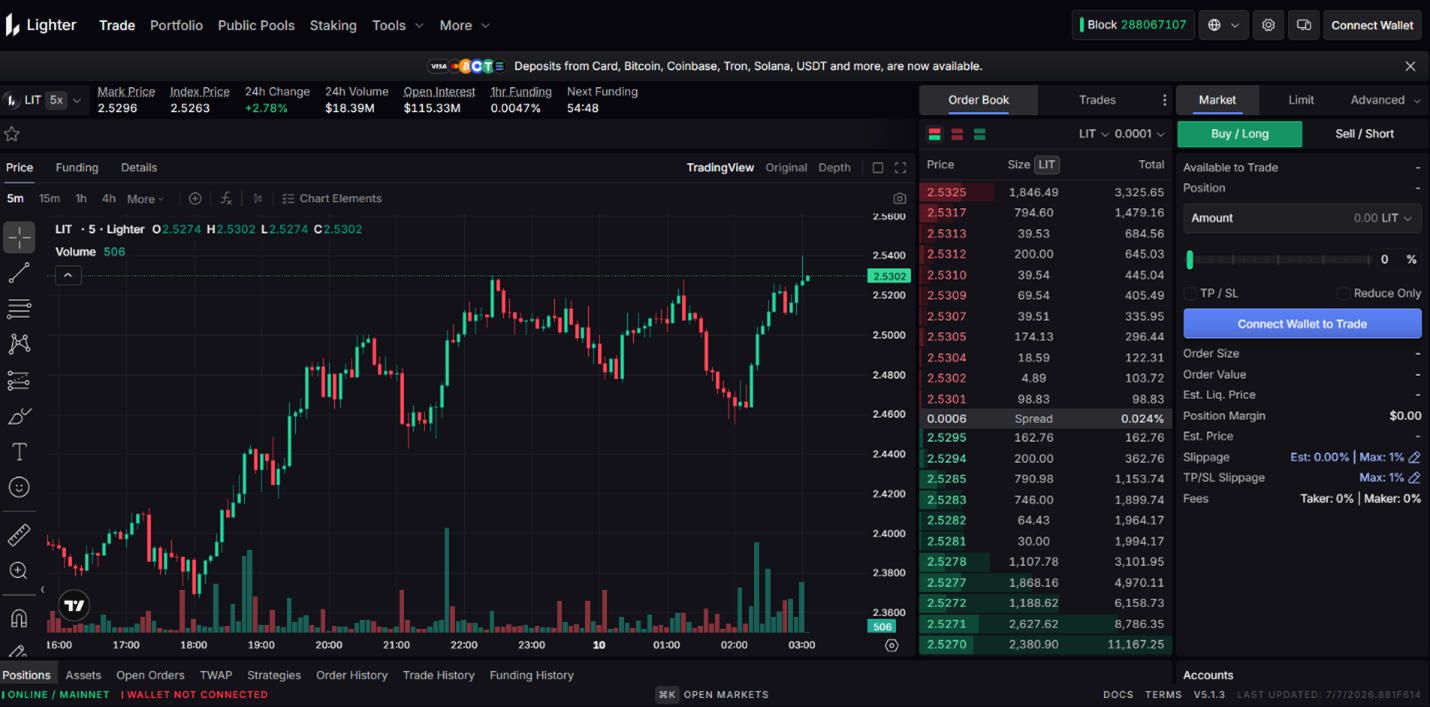
That fee model points to something the price charts miss: Hyperliquid and Lighter are not the same product.
Hyperliquid runs a liquidity layer and makes its money from retail trading fees and its own ecosystem. Lighter is trying to be plumbing — cheap or free for everyday users, and designed to plug in behind fintechs, brokers and trading desks.
Which is why the Robinhood deal is the story. It isn't a scoreboard win over HYPE.
It's the first proof that the infrastructure model works.
The Robinhood Test
In early July, Lighter became the exchange powering Robinhood Chain — Robinhood's own blockchain, built directly into the Robinhood Wallet.
Let me put it plainly: Robinhood, an earlier investor in Lighter, put an on-chain perp market in front of roughly 28 million customers. Most of whom have never opened a crypto exchange.
The early response was fast. Within a week, trading on Robinhood Chain topped $500 million in a single day, helped by $11 million in LIT that Lighter set aside for Robinhood users.
For the average investor, that is the practical part: On-chain trading delivered inside an app they already have and know how to use.
The Tokenomics: Buybacks and Burns
Here are the numbers to know …
LIT has a fixed supply of 1 billion tokens, with 250 million (25%) circulating today. That puts its market cap near $511 million and its fully diluted value — the price if every token were unlocked — at about $2.84 billion.
The gap between those two figures is the point.
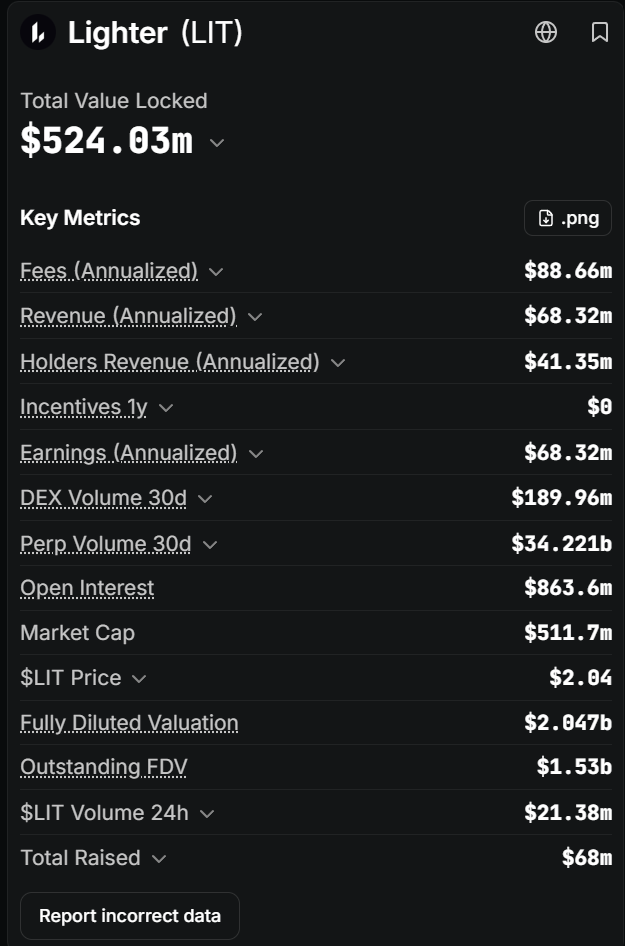
The token runs on a familiar machine. Lighter earns real money — roughly $68 million in annualized revenue — and channels a large share of it into buying LIT on the open market, the way a company buys back its own shares.
It has repurchased about 15.8 million LIT so far, roughly 6.3% of the circulating supply.
From here it goes a step further. Rather than hold those tokens, Lighter plans to permanently burn them, sending them to an address no one can ever spend. A buyback that then shreds the shares.
Holders can also stake for about 6% a year.
The Catch: Who Owns the Supply
Here is the risk, and it is the mirror image of HYPE's biggest strength.
Hyperliquid launched with no venture capital and no insider allocation. Lighter did the opposite.
Half of all LIT tokens sits with insiders — 26% to the team and 24% to investors like Founders Fund and Ribbit Capital. All of which is locked for a year and then vested through roughly 2029.
The first large team unlock lands in early 2027.
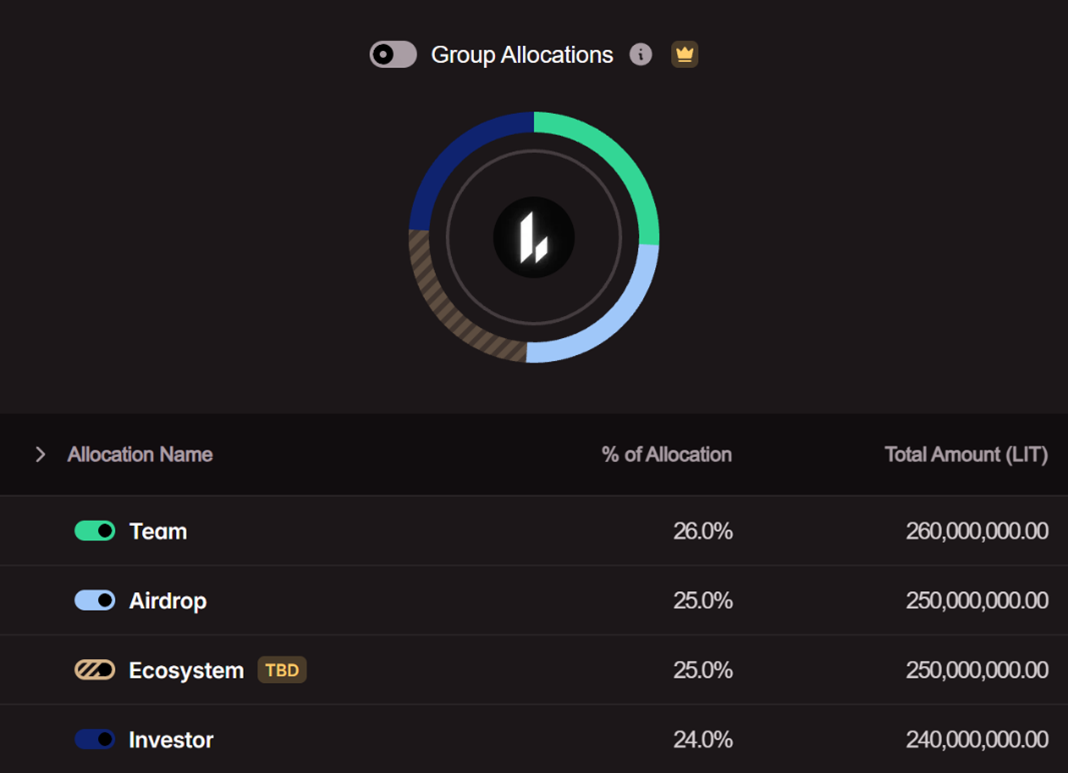
That overhang is why the $2.5 billion fully diluted value sits so far above the $620 million market cap. The token already trades about 68% below its December debut, and daily volume fell sharply once the launch airdrop faded.
Real revenue, real buybacks, a supply loaded toward insiders: the same traits an investor would weigh on any coin.
Bottom Line
Lighter and Hyperliquid are chasing the same market from opposite foundations. One is retail-fee driven with a clean, VC-free supply. The other is built to live behind brokers, with a token that is deflationary on one side and heavily insider-owned on the other.
Neither profile is a verdict. They are simply not the same bet.
But they do benefit from similar tailwinds.
We’ve already seen HYPE’s success. Now, the Robinhood integration is the clearest sign yet of how differently Lighter intends to grow.
Best,
Beth Canova
P.S. LIT has managed an impressive 111% rally over the past three months — while Bitcoin moved sideways and most of the broad market languished.
That strength, in addition to its partnership with Robinhood, is why I’ll be watching this crypto once the bull run starts in earnest. Growth investors and those with a longer investment horizon may want to do the same.
And in the meantime, if you’re looking to increase the capital you have available before the next buy opportunity, I suggest you check out our Friday Income Machine.
It’s been proven to produce consistent, weekly payout opportunities of up to $1,000 — and potentially more — nearly every Friday morning since 2020.