The Next AI Boom Could Start with These 2 Stocks

 |
| By Jurica Dujmovic |
Artificial intelligence isn’t just a trend or headline. It’s a full-scale takeover. One that’s infiltrated almost everyone’s lives.
Even if you’ve never used a large language model (LLM) like ChatGPT …
Or turn off your phone’s AI assistant …
Or never personally added an AI stock or AI-focused ETF to your investment portfolio …
You’re likely more exposed to this sector than you realize.
Just a handful of tech companies with AI exposure make up 30% of the S&P 500 as of last month. Which means your 401k likely holds that exposure in an S&P Index fund.

But many of those tech giants, which are focused on AI hardware, have already had their AI exposure priced in. Which caps the kind of returns you can expect.
For investors who missed Nvidia’s run, another way to profit from AI is …
The Software Supporting the System
Established software companies could give investors another entrance point.
They already supply the systems that businesses use to manage customers and daily operations. Those relationships give them a useful starting point: They can sell AI tools that help existing customers get more work done within software they already use.
The direct hardware plays earn money from the infrastructure buildout. That requires a lot of capital up front and the prospective payouts from that investment have largely been accounted for.
Software vendors, on the other hand, can earn more when that infrastructure helps customers resolve support calls, process orders or complete work more efficiently.
And much of that hasn’t been reflected in prices just yet.
That gives investors the chance to benefit at different stages of AI adoption.
This isn’t just my opinion, either. The market is beginning to reconsider this very opportunity.
What the Early Data Suggests
On Oct. 6, the S&P 500 software and services index reached a fresh 2026 high. It was up about 5% for the year.
In fact, the expected software-sector earnings growth for 2026 had risen to 20.6%, from 13.8% at the end of March, according to LSEG data reported by Reuters.

That improving earnings outlook gives us a reason to investigate.
A smaller share-price gain, by itself, tells us little about value. The investment case depends on whether AI can expand a software company's profits beyond what buyers of its stock already expect.
I think we can make a fairly strong case for that. Because the reality is the impact of AI on daily processes hasn’t been priced in yet.
Just consider the work behind a routine customer refund. A process that Amazon (AMZN) alone oversees thousands of times a day.
Someone must …
- Identify the customer,
- Find the purchase,
- Check the policy,
- Obtain any necessary approval,
- And record the payment.
And that’s after a customer has taken the time to complete multiple steps on their end to initiate the process.
All an AI system needs is a reliable account of what happened, access to those records and permission to take those actions.
A supplier already handling those processes has a useful starting point.
It can offer automation inside a system the customer understands, with existing connections to the rest of the business. Which in turn could make adoption easier. And give the supplier another service to sell.
2 Software-as-a-Service Bets Leading the Way
Let’s take Salesforce (CRM) as an example.
In its Q3 earnings report, it announced revenue had increased 11% to $11.3 billion. Of that, more than $1.5 billion in annual recurring revenue came from Agentforce, its AI offering.
To be fair, that AI figure should be understood in context. Annual recurring revenue measures the annualized value of recurring business; it is not revenue collected during the quarter.
But the point stands. And Salesforce is moving forward with its AI software push. Reporting also revealed the company expanded to include products such as Slackbot and Headless 360.
The commercial mechanism is encouraging.
Salesforce offers pricing based on actions performed by its AI agents, including updating customer records. That gives it a way to earn revenue as automated work increases, even when a customer's employee count stays flat.
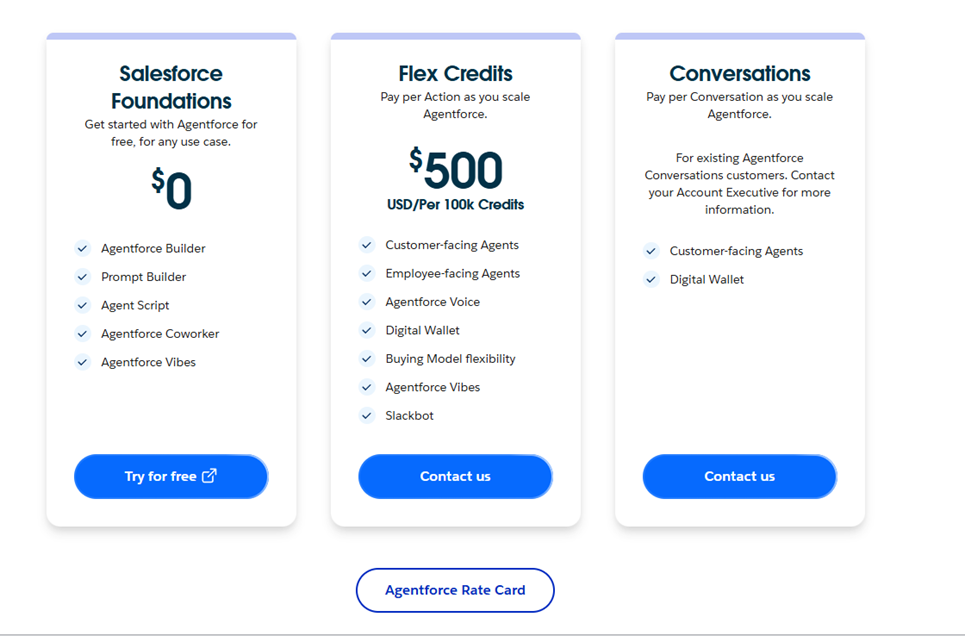
The opportunity becomes meaningful if customers find that paying for automation saves them more elsewhere. A company could spend more with Salesforce while reducing its total cost of serving its own customers.
Both sides can benefit from that arrangement.
ServiceNow (NOW) offers another case.
Its software helps organizations manage work such as technology support and employee requests. In the quarter ended June 30, subscription revenue rose 24.5% to $3.88 billion, or 23% after adjusting for currency movements.
The company said ServiceNow AI had passed $1 billion in annual contract value.
Like with Salesforce, that contract measure also differs from quarterly revenue. Still, it shows customers making financial commitments to AI.
What to Watch Next
For investors, the next test is whether those commitments become durable, profitable business.
Serving the AI demand carries costs. And more automated tasks that generate more sales … can also increase computing expenses. And ServiceNow has already admitted its gross-margin outlook reflects greater use of its large cloud-provider partnerships and faster AI adoption.
Investors therefore need to follow how much revenue remains after delivering the service.
The share prices introduce another important distinction. On Oct. 7, Stock Analysis listed forward price-to-earnings ratios of roughly 15 for Salesforce and 30 for ServiceNow.
That tells us that investors are paying a substantially higher multiple for ServiceNow's prospects.
That premium could be justified by stronger, sustained growth. But it also creates a higher hurdle.
For both opportunities, rising profits may not be enough to lift the share price if investors become less optimistic about future growth.
Competition could trigger just such a reassessment.
Customers can negotiate over software budgets, choose competing products or build more tools themselves. Automation could also reduce demand for licenses priced by employee.
If those pressures weaken the outlook for growth, we could see investors grow less willing to pay that premium.
So, here’s the shortlist of things to keep on your radar when reviewing Q4 and end-of-year results …
- First, look to see if growth comes from customers buying more, after accounting for acquisitions and currency.
- Second, check if customers renew and expand AI deployments after trying them.
- Third, confirm whether that demand improves profit and cash generation per share after the costs of delivery and employee compensation are taken into account.
- Finally, you’ll want to review employee stock awards. They can dilute existing shareholders. At the same time, repurchasing shares to offset that dilution consumes cash that could otherwise support investment or dividends.
These tests can give you a useful way to narrow the AI software field.
Bottom Line
There is a real opportunity in software companies that can make AI valuable enough to bring in repeat customers willing to pay more.
Which means the next phase of the AI rally will reward the companies that can convert that business into shareholder returns.
To find them, you’ll need to follow the money from the customer's budget … all the way to earnings per share.
Best,
Jurica Dujmovic