Visa, Mastercard and Even Western Union Have Joined Crypto’s Quiet Revolution
 |
| By Juan Villaverde |
Somewhere right now, a piece of software is buying something.
Using data from a Google service, it finds the price, pays a fraction of a cent and gets the answer back in seconds.
No human signs in. No account is created. No credit card is typed. The whole transaction settles before anyone could notice it happened.
Most people would consider a completely automated transaction a matter for sci-fi stories. But the bigger story sits one layer down, and it’s already our reality …
Money moved across a public blockchain, and nobody had to think about it.
In early May 2026, the Solana Foundation, in partnership with Google Cloud, launched a payment gateway called Pay.sh. It lets autonomous software discover an online service, see a price, and pay per request using stablecoins (digital dollars that move on a blockchain) on the Solana (SOL, “B-”) network.

The supported services read like a roster of modern computing:
- Gemini,
- BigQuery,
- Vertex AI, and more.
As Google Cloud's Web3 strategy head Rich Widmann put it, software now needs "to transact autonomously, without setup or credentials getting in the way."
But zoom out from the robots. That’s just the headline. But the real value for investors is in the meat of this story: A trillion-dollar tech company just chose a blockchain to settle real payments.
That choice is telling.
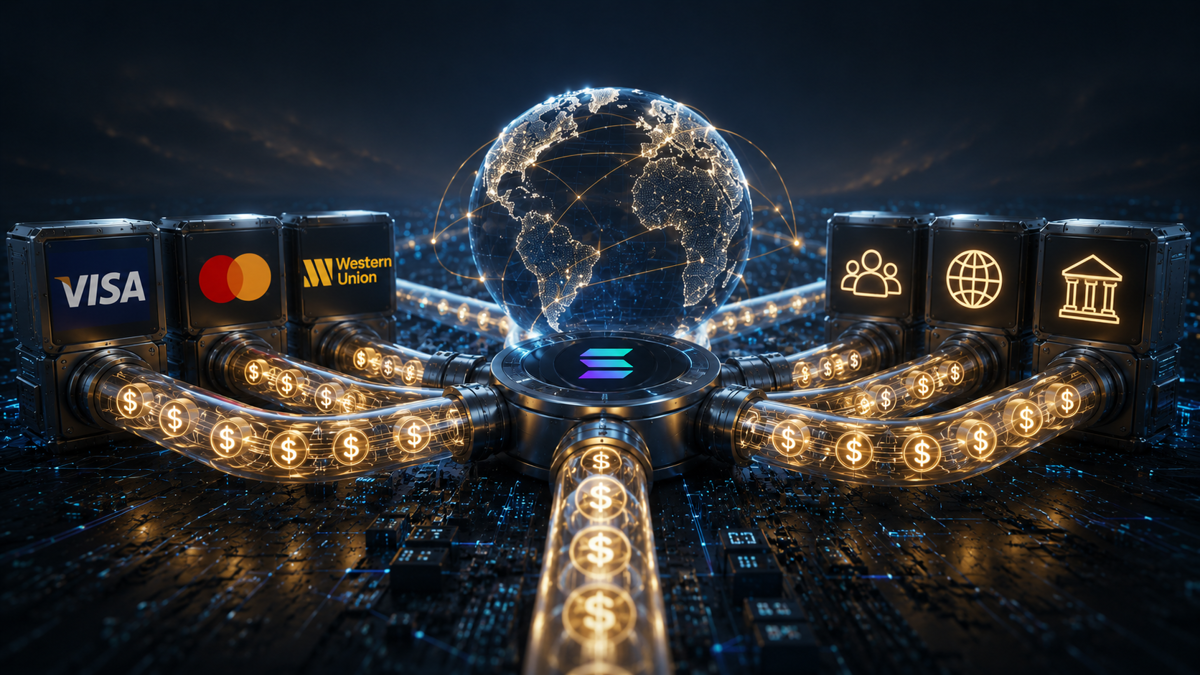
While the market obsesses over token prices, crypto is being wired into the plumbing of everyday payments, rails that keep running no matter what the cycle does.
What a "Rail" Actually Is
In traditional finance, a settlement rail is the back-end pipe that moves money between banks. You never see it. When you swipe your card at the grocery store, Visa's (V) rail does the quiet work behind the screen.
Stablecoins — via blockchain technology — are becoming a new rail.
The clearest proof isn't a press release. It's how ordinary people are spending.
The Evidence Nobody Is Hyping
Independent researcher Alex Obchakevich studied 76 weeks of data from 16 crypto card providers. A crypto card is a debit card funded by stablecoins instead of a checking account.
His finding, published in June 2026, is that transaction activity is up 2.7x since January 2025, with virtually no correlation to Bitcoin's (BTC, “B+”) price.
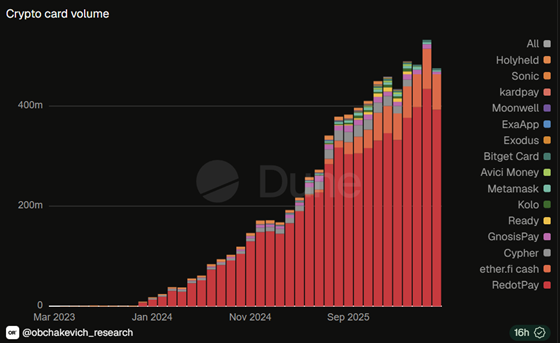
That last part matters. When Bitcoin rallied, card use didn't spike. When it fell, card use didn't crater.
The two simply drifted apart.
The amounts tell the same story: Median top-ups held in a humble $90 to $135 band, the size of a grocery run or a tank of gas, not a speculative bet. And deposits spread out, moving from a handful of heavy users to a broad base of everyday spenders.
"Crypto cards are no longer just a toy for speculators," Obchakevich wrote. Average folks like us are now using crypto assets — digital dollars — to pay for their daily needs.
Why Wall Street's Plumbers Are Paying Attention
The institutions you already trust are laying the same pipes.
Visa began settling stablecoin payments for U.S. businesses in December 2025. By April 2026, that effort was running at roughly a $7 billion annualized rate across nine blockchains. In June 2026, Mastercard (MA) expanded its own settlement to include regulated stablecoins — including Circle's USDC and Ripple's RLUSD — with settlement available on weekends and holidays.
Even Western Union (WU), a 175-year-old name in cross-border money, is launching a stablecoin called USDPT on Solana.
The interest reaches the asset managers, too.
In late June 2026, Morgan Stanley (MS) amended its Solana ETF filings with a record-low 0.14% fee. That’s the kind of pricing a firm only sets when it expects real money to show up.
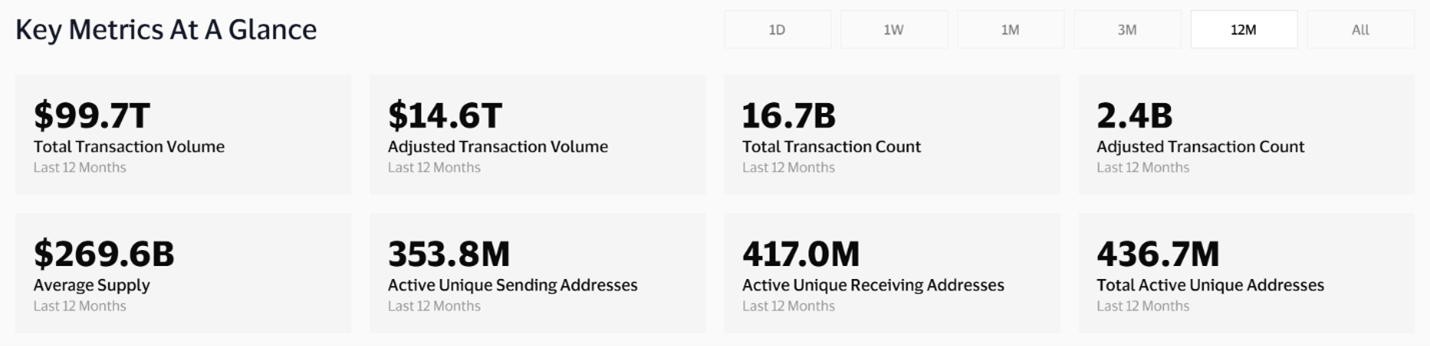
This is the part savvy investors should sit with: The same firms that move trillions through the global economy …
Are quietly rebuilding their pipes to carry digital dollars.
Here's the Kicker
Solana — the network powering the Google deal — is already considered a market leader, standing next to Bitcoin and Ethereum (ETH, “B+”). Its market cap sits near $47 billion, ranking No. 7 among all cryptocurrencies, on roughly $2 billion in daily volume.
And yet its token, SOL, trades around $80, down about 72% from its January 2025 record high near $293. It is down roughly 40%-46% year-to-date, depending on the baseline.
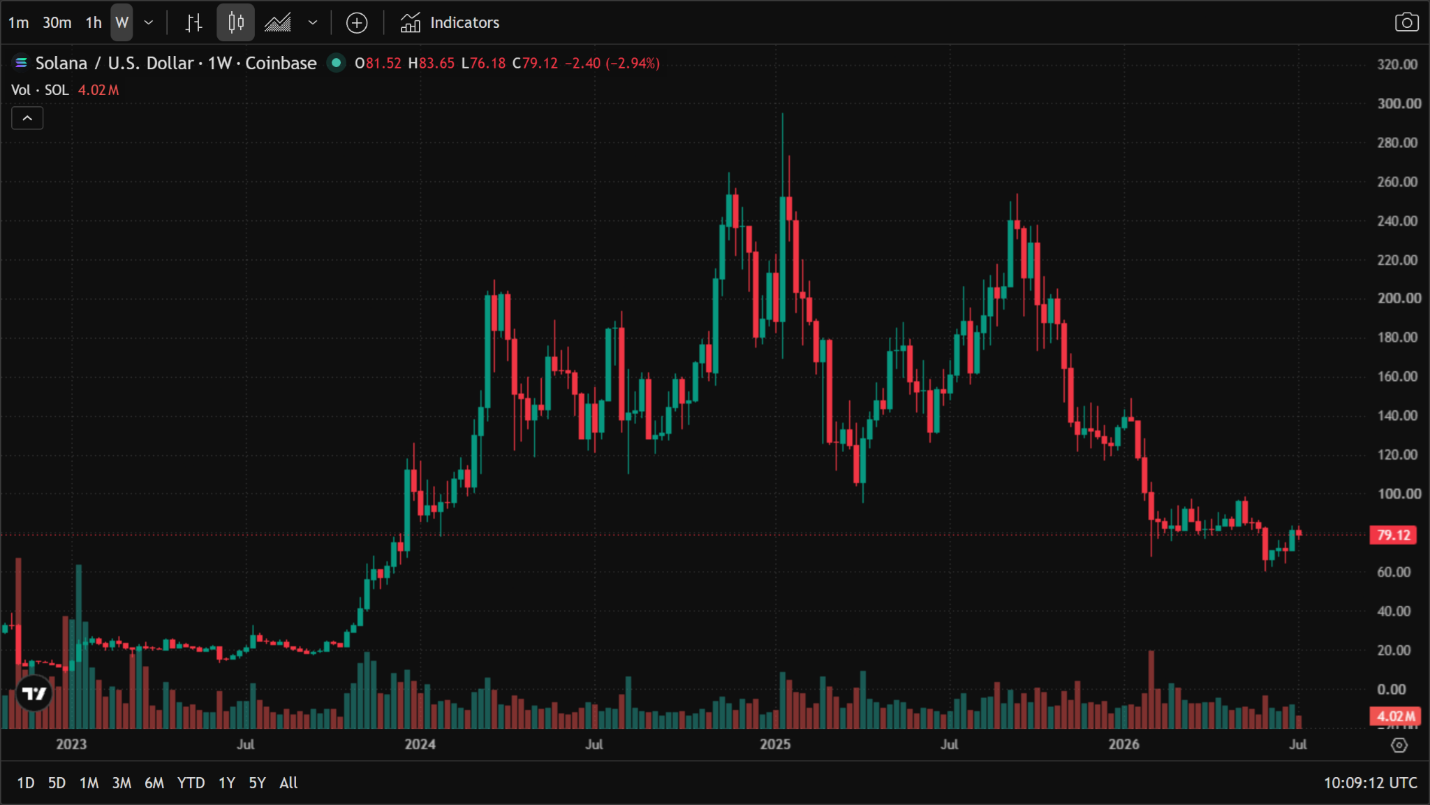
The token has fallen hard. Yet the rail it powers is busier than ever.
That gap is an investment thesis all on its own.
The Bottom Line
For sophisticated investors, the lesson is about where to look.
Chasing the token means riding a brutal price cycle. Watching the infrastructure is calmer and arguably more telling.
The lower-risk windows are the payment networks themselves, Visa and Mastercard, which are now plumbing stablecoins into their core.
But there are also regulated wrappers, like the Bitwise Solana Staking ETF (BSOL). It’s down roughly a third this year, for those who want exposure inside a familiar brokerage account.
And for the crypto purists, you could bet directly on the crypto rails themselves. Solana and Ethereum stand to be the most likely chains institutions will go with. But that’s not to say other chains won’t have their moment.
Prices will keep grabbing the headlines. But it’s the pipes laid underneath that will be the part worth understanding.
Best,
Juan Villaverde
P.S. To see how I and my Weiss Crypto Investor members will play this trend in the coming cycle — and how my Crypto Timing Model will help us time our moves — click here.