 |
| By Beth Canova |
On Friday, Bitcoin (BTC, “B+”) fell back to the $65,000 level. As Juan has confirmed, BTC is following oil’s lead. Which means we’ll need to see the conflict in the Mideast ease before Bitcoin can rally for real.
In this moment, it’s easy to narrow your focus to just the price action.
But if you do that, you’ll miss out on all the big, bullish developments happening across the blockchain.
For example …
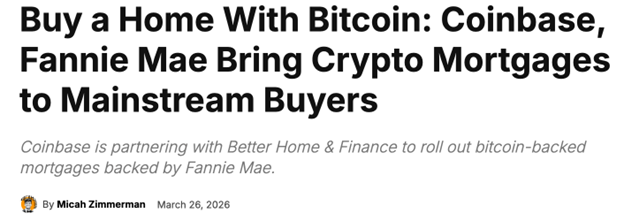
You can now use crypto to secure your mortgage in the U.S.
Coinbase (Coin) and Better Home & Finance just launched Bitcoin-backed mortgages. And the Federal National Mortgage Association — more commonly known as Fannie Mae — is on board.
Borrowers can now pledge BTC or USD Coin (USDC, Stablecoin) as collateral for a down payment without needing to sell them for dollars. That means you don’t have to pay capital gains tax OR lose any exposure to the market.
Your crypto collateral is only at risk if you are delinquent on your payment for 60 days.
The problem this solves is real. Around 41% of American families can't buy a home because they don't have enough liquid cash.
With 52 million Americans holding crypto, a lot of that wealth has been sitting on the sidelines of the housing market. Now it doesn't have to.
Not only that, but we see evidence on-chain that the bulls should be on standby.
Ethereum on exchanges has just hit a 10-year low, for example.
That time frame covers nearly Ethereum's entire existence. And the outflows aren't slowing down. The past few months have shown steady net withdrawals, culminating in a single-day $1.67B pull on March 22.
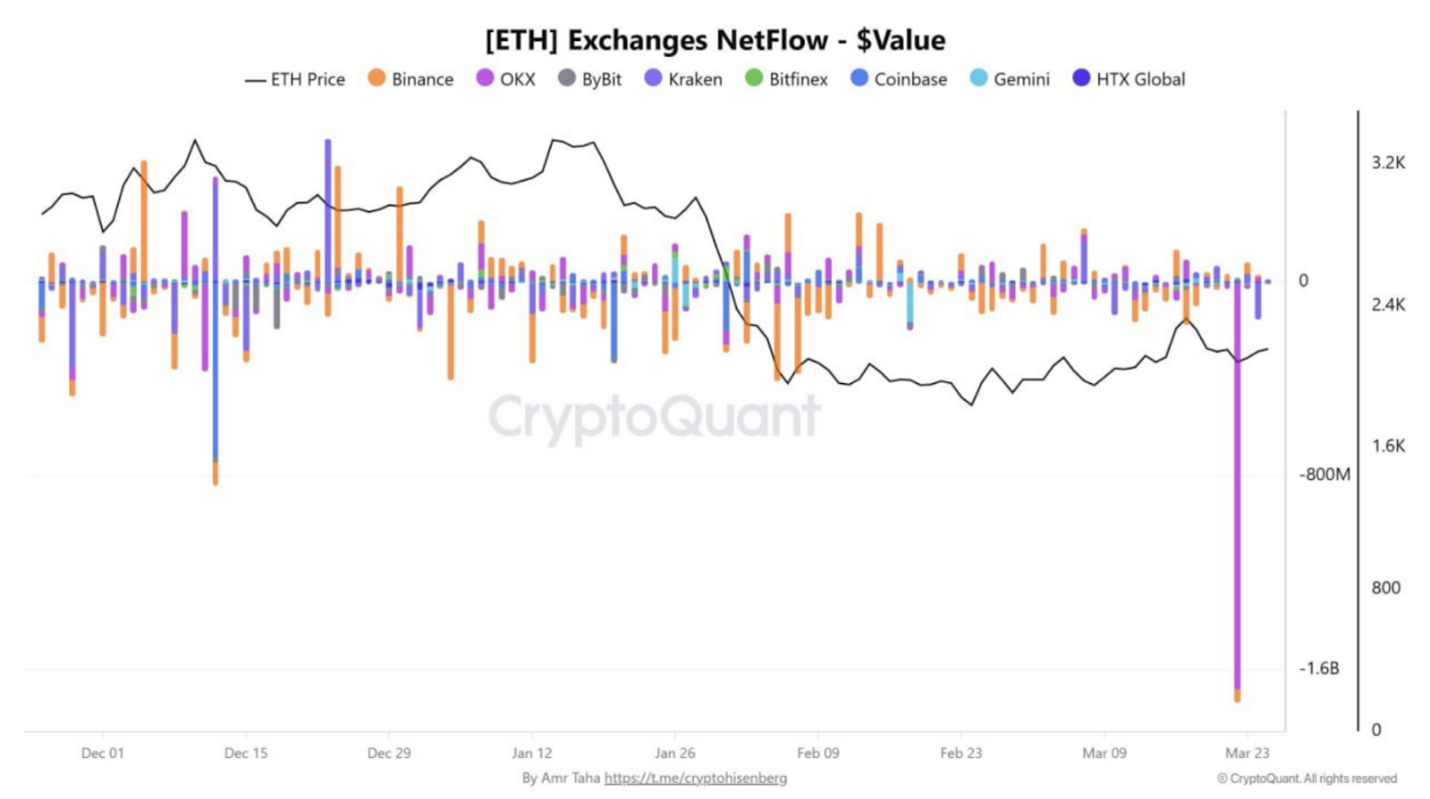
When coins leave exchanges at this pace, they're not being sold. They're being moved to long-term storage.
Accumulation is underway. Something is building.
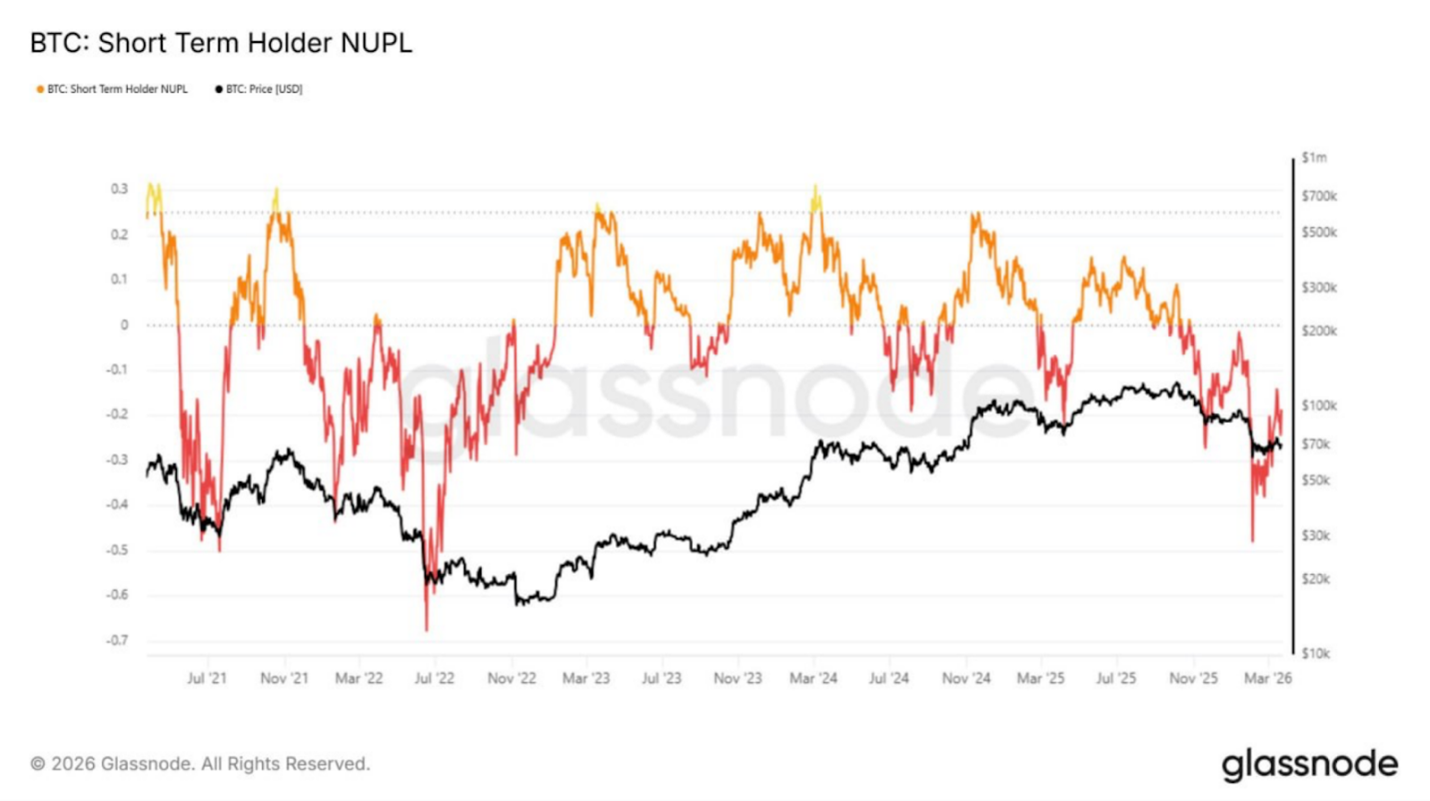
Finally, short-term Bitcoin holders are sitting on massive losses.
This phenomenon is known as “capitulation.” The damage from the recent crash is on par with the COVID crash of 2020 and the post-Terra collapse in July 2022. Both of those turned out to be generational buying opportunities.
In fact, every major capitulation event so far has been followed by a recovery. This one looks no different.
Developments like these may not move prices up tomorrow. But they represent something more important: Longevity.
Regulators and investors don’t make moves like these in tough times unless they’re certain an asset has a brighter future than present.
Which tells us that the smart money sees a bright and long future for crypto.
Your Weiss crypto experts agree. And here’s what they said to keep your eyes on this week …
For the past month, markets have marched to the beat of the oil drum — which itself trades on headlines coming out of the Trump White House.
And yet, Juan Villaverde sees signs that the crypto market may be entering a much-anticipated "relief" phase.
He lays out the key dates to watch — and how you can benefit from his Crypto Timing Model — in his latest update.
CLARITY Will Be the Key Variable for Crypto This Spring
Earlier this week, we got to see the latest draft of the CLARITY Act, which should give us more, well, clarity around stablecoin regulation. And it looks like the banks won this round. Tech expert Jurica Dujmovic sorts through the politicking and legal jargon to give you the simple explanation and what this means for stablecoin yield going forward.
Crypto Begins to Welcome the Most Conservative Capital in the World
Another big development this week came from some of the most conservative capital: Pension funds. You know an asset class is here for the long haul when demand has retirement accounts seeking exposure.
Which is why Mark Gough takes you through exactly what this means for your crypto today.
Bitcoin Is Winning the War Against Gold
Talk about a victory! Crypto enthusiasts have believed Bitcoin is a better safe haven than gold for a while. But now, we have proof. BTC has outperformed the yellow metal across several crises. And the latest in Iran is no different.
DeFi expert Marija Matić reveals the data — both on-chain and off — that shows what’s happening. And how Bitcoin will likely respond next.
The Mideast’s Most Critical Commodity Is NOT Oil
Even though the markets shadow oil’s every move, it’s not the commodity that will shake the markets the most. Because it isn’t the most important commodity impacted by the war. Water is.
And with millions of civilians — and the Persian Gulf’s 158 AI centers — dependent on that water, Bob Czeschin wants you to see how many are beginning to price in threats against the area’s desalination plants. And how those threats may influence the price of BTC, gold and even AI plays.
But that’s all for this week. Be sure to look for your next Weiss Crypto Daily update tomorrow afternoon.
Best,
Beth Canova
Crypto Managing Editor